

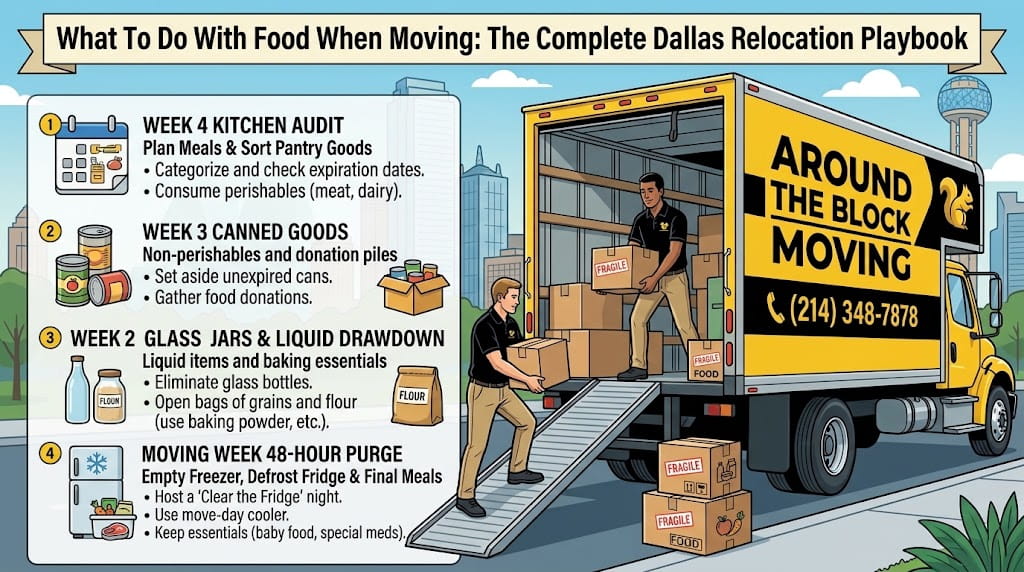
When planning what to do with food when moving, follow the “Consume, Donate, Pack, or Purge” framework starting three to four weeks before moving day. Perishable food—including raw meats, dairy, and opened condiments—should be systematically consumed or discarded before truck arrival because licensed movers cannot legally or safely transport open perishables in non-refrigerated cargo bays. Unopened, non-perishable canned goods and dry boxed staples should be packed in small 1.5-cubic-foot cartons or donated to community organizations like the North Texas Food Bank.
Under safety and cargo contamination mandates enforced by the Texas Department of Motor Vehicles (TxDMV) in Title 43 of the Texas Administrative Code (43 TAC § 218) and federal household goods carrier tariffs, commercial moving companies are strictly prohibited from loading perishable food, frozen items, or open liquids onto transport trucks. In North Texas summer temperatures—where moving truck cargo bays routinely exceed 125°F—perishable foods enter the USDA Food Safety and Inspection Service (FSIS) “Danger Zone” 40°F -140°F) within minutes, creating extreme bacterial growth risks, insect attraction, and catastrophic leakage onto upholstered furniture.
The 4-Week “Eat-Down” Strategy (Clearing Your Kitchen Without Waste)
The kitchen is universally the heaviest, messiest, and most expensive room to move pound-for-pound. Stashing dozens of heavy glass pasta sauce jars and canned vegetables into moving boxes adds hundreds of unnecessary pounds to your inventory weight, inflating hourly handling cycles.
At Around The Block Moving Company, we believe moving should be a smooth, stress-free celebration! The secret to avoiding food panic on moving morning is running an organized, step-by-step pantry drawdown. Here is how Dallas residents systematically clear their refrigerators and pantries before dispatch day:
Week 4: The Kitchen Audit & Inventory Freeze
- Stop Buying in Bulk: Put an immediate freeze on wholesale club trips to Costco or Sam’s Club. Buy only fresh produce, milk, and bread in quantities your household can consume within 5 to 7 days.
- Deep Freezer Exploration: Pull items from the back of your freezer to the front. Plan dinner menus around frozen steaks, chicken breasts, frozen vegetables, and prepared meals.
- Toss Expired Items: Check expiration dates on specialty condiments, baking mixes, salad dressings, and spices. Discard anything past its prime without guilt.
Week 3: High-Gravity Canned Goods & Dry Staples
- Evaluate Box Weight: Standard canned goods weigh between 10 and 28 ounces each. A single pantry shelf of canned soup, beans, and tomato sauce quickly totals 40 to 60 pounds.
- Target Non-Perishable Consumption: Incorporate rice, dry pasta, lentils, and canned broths into weeknight casseroles and stir-fries.
- Set Aside Donation Piles: Group unopened, unexpired cans and dry cartons that your family will not finish into dedicated donation bags.
Week 2: Fragile Glass Jars & Liquid Drawdown
- Eliminate Glass Bottling: Salad dressings, olive oil, soy sauce, and balsamic vinegars in glass bottles carry high breakage and leakage risks. Try to finish partially used bottles.
- Baking Essentials: Use up remaining flour, sugar, and baking powder for weekend treats or send them home with neighbors. Open bags of grain attract pantry pests during warm relocations.
Moving Week: The Final 48-Hour Purge
- Host a “Clear the Fridge” Night: Invite friends or neighbors over for an informal dinner party to enjoy unopened beer, wine, cheeses, and frozen desserts.
- Defrost & Clean the Refrigerator: 24 to 48 hours prior to the movers arriving, completely empty the refrigerator and freezer. Disconnect the unit, drain ice-maker water lines, and wipe down interior shelving with an eco-friendly disinfectant so mildew cannot form during transit.
The Food Disposition Matrix: Pack, Donate, or Toss?
| Food Category | Examples | Recommended Action | Moving Protocol / Destination |
| Unopened Dry Goods | Pasta, rice, oats, sealed cereal | Pack (or Donate) | 1.5 cu. ft. “Book Boxes”; tape seams firmly |
| Unopened Canned Goods | Canned tomatoes, beans, tuna, soups | Donate (or Pack) | Donate to North Texas Food Bank / Move For Hunger |
| Open Condiments / Oils | Ketchup, mayo, olive oil, soy sauce | Toss (or Personal Car) | Do NOT load on truck; transport upright in personal vehicle |
| Frozen Meats & Seafood | Steaks, shrimp, chicken, ground beef | Consume or Toss | Carrier restriction: strictly prohibited on moving truck |
| Refrigerated Dairy & Eggs | Milk, yogurt, butter, artisan cheese | Consume or Toss | Perishes within 2 hours above 40°F; discard |
| Fresh Produce | Apples, bananas, potatoes, onions | Consume or Personal Car | Bruises easily in transit; keep in personal vehicle cooler |
| Opened Spices & Baking | Flour, cornstarch, sugar, paprika | Toss or Bag | Seal inside airtight Ziploc bags if packing to prevent leaks |
Donating Unopened Food to Dallas Non-Profits
Rather than throwing perfectly good food into the landfill or paying movers hourly rates to haul heavy canned goods across the Metroplex, donate your unopened, shelf-stable items to local North Texas relief organizations. Most local food banks welcome shelf-stable canned proteins (canned chicken, tuna, peanut butter), whole grain pastas, and baby formula:
- North Texas Food Bank (NTFB): Headquartered in Plano with regional collection sites and affiliated pantries across Dallas, Collin, and Denton counties. NTFB accepts unopened, non-perishable canned goods, boxed meals, and shelf-stable dry items.
- Dallas Bethlehem Center (South Dallas): Distributes non-perishable grocery boxes to South Dallas families and senior residents.
- Move For Hunger Network: Many reputable licensed Dallas carriers partner with Move For Hunger. Ask your moving coordinator if your crew collects unopened, non-perishable food boxes directly on moving day to deliver them directly to local pantries on your behalf!
Packing Protocol: How to Pack Food That Stays
If you are completing a short 20-minute local relocation from Uptown to Lakewood or Richardson to Plano, you may choose to take high-value pantry items and sealed dry goods with you. Follow these strict packing protocols:
- Use Small 1.5-Cubic-Foot Cartons: Canned goods and heavy jars become dangerously heavy fast. Never use medium or large boxes for pantry items; small “book boxes” keep box weights under 40 pounds, preventing box bottoms from blowing out.
- The “Ziploc Seal” Safeguard: For flour, sugar, syrup, honey, or cooking oils, place each item inside an individual gallon Ziploc bag before boxing. Even if pressure shifts cause a cap to pop loose, sticky contents remain contained inside the plastic bag.
- Line Box Bottoms with Crushed Paper: Lay a 2-inch cushion of crumpled, unprinted packing paper at the base of every box to absorb transit road vibrations on I-35E or US-75.
- Personal Cooler for Move-Day Snacks: Pack a dedicated insulated cooler with ice packs for your family’s personal vehicle. Stock it with water bottles, sports drinks, fresh fruit, string cheese, and protein bars to stay hydrated and energized during the move without opening the refrigerator.
3 Frequently Asked Questions About Moving Food
Will Dallas moving companies move my frozen food in a cooler?
No. Under standard household goods carrier tariffs and Texas Administrative Code safety rules, commercial moving companies cannot haul perishable or frozen goods inside the moving van. Temperature levels in non-climate-controlled truck bays can exceed 125°F during North Texas summers, quickly thawing food and leaking contaminated water onto your furniture. Perishable items should be consumed prior to the move, given to neighbors, or transported directly in your personal vehicle using an insulated cooler.
Planning a Move in DFW?
What happens if I accidentally pack open liquids or oils on the moving truck?
Packing open oils, cooking wine, or liquid condiments creates a massive liability hazard. If a glass bottle cracks or a plastic cap unscrews during transit, liquid can leak through cardboard boxes, soaking into mattresses, rugs, or upholstered sofas. Furthermore, moving contracts exclude carrier liability for water, chemical, or liquid damage caused by customer-packed prohibited goods.
How far in advance should I defrost my refrigerator before Dallas movers arrive?
You should completely empty, unplug, and defrost your refrigerator and freezer at least 24 hours before your scheduled moving dispatch. Place old towels around the base of the unit to capture melting frost, empty the drain pan, and disconnect water supply lines leading to the ice maker. Leaving the refrigerator doors propped open overnight allows internal moisture to evaporate, preventing mold and foul odors from forming while the appliance is sealed in the moving truck.
Ready for an Organized, Worry-Free Dallas Move?
Relocating shouldn’t mean stressing over half-empty salad dressing bottles or carrying 200 pounds of heavy canned food down three flights of stairs. By organizing your pantry early and letting trusted professionals handle the heavy lifting, your kitchen transition becomes fast, clean, and totally hassle-free!
Let the friendly experts at Around The Block Moving Company make your relocation effortless. Serving Dallas-Fort Worth property owners since 1993 under TxDMV License #6380695C with an A+ BBB rating, we bring commercial-grade floor protection, clean trucks, and upbeat crews who treat your home like their own. Contact our team today for a free, transparent estimate!
Local Moving Resources
Looking for more moving tips? This guide is part of our local Packing & Unpacking series. To learn more about our full moving services in Dallas, check out our: Dallas Packing & Storage Services.